

A torso sex toy is a partial-body model that reproduces the chest, hips and one or more usable cavities — or, in male-anatomy versions, a mounted shaft — without the head, arms or legs of a full doll. It exists for one practical reason: a full-size doll weighs 25–40 kg and needs a wardrobe to store, while a torso covers most of the same ground at 1.4–27 kg and fits in a drawer or under a bed. This guide explains the formats that get sold under the names torso sex toy, torso dildo, torso masturbator and half-body doll, what actually separates them, and how to match one to your own storage, budget and handling limits.
Terminology in this category is genuinely messy, and that costs buyers money. The same physical product is listed as a “torso toy” on one site, a “dildotorso” on another and a “half-body sex doll” on a third. Below, each name is tied to a specific physical configuration so you can compare like with like.
A torso is defined by what it removes, not by what it adds. Manufacturers cut a full doll at two points — usually mid-thigh and either the collarbone or the neck — and keep the section that carries the usable anatomy. Everything else is weight and storage volume that most owners do not use.
Three consequences follow, and they explain nearly every buying decision in this category:
What a torso gives up is posability and full-body presence. If either matters to you, a torso is the wrong format and no amount of specification-shopping will fix that.
No. Torso, half-body doll, bust and the brand-adjacent spelling poptorso all describe the same cut. Regional habit drives the wording: English-language stores tend toward “torso”, Dutch and German listings toward variants of sexpop and Sextorso. When you see these words in a product title, treat them as synonyms and compare the specifications underneath.
Once you set the naming aside, the category resolves into seven configurations. The table below is the fastest way to place a listing you are looking at.
| Format | Typical weight | Anatomy included | Best suited to | Browse |
|---|---|---|---|---|
| Mini / compact torso | 1.4 – 5 kg | One cavity, reduced hips | First purchase, tight storage, travel | Mini torsos |
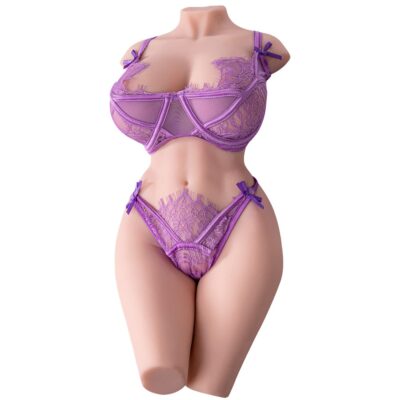
| Standard female torso | 5 – 15 kg | Chest, hips, one or two cavities | The default choice for most buyers | Female torsos |
| Full-figure torso | 15 – 27 kg | Wider hips, heavier chest | Buyers prioritising presence and stability | Full-figure torsos |
| Hip-focused torso | 4 – 12 kg | Hips and rear only, no chest | Lowest weight for a given cavity size | Hip-focused models |
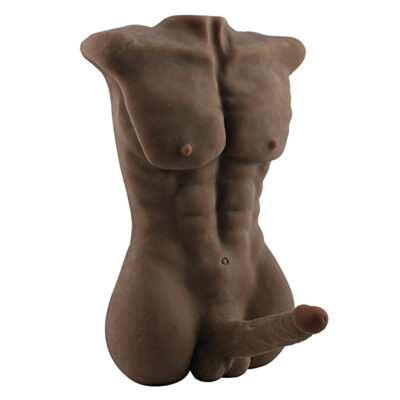
| Male-anatomy torso (torso dildo) | 3 – 15 kg | Chest, hips, mounted shaft | Buyers wanting a mounted, hands-free shaft | Penis torsos |
| Torso with head | 12 – 20 kg | Standard torso plus fixed head | Buyers who want a face; costs storage | Torsos with head |
| Powered / vibrating torso | 5 – 14 kg | Standard torso plus internal motor | Buyers wanting added stimulation modes | Vibrating torsos |
Two formats in that list are routinely mislabelled. Hip-focused models are often sold as “pocket pussies” even though they are five to ten times heavier than a true sleeve — if you specifically want the compact sleeve format, our pocket pussy guide covers that separate category properly. And male-anatomy torsos are listed as “torso dildos”, “dildotorso” or simply “torso toys” depending on the seller; our male torso buyer’s guide goes deeper on shaft specifications.
If you only compare one number across listings, compare weight. It predicts handling, storage, cavity depth, price and — more than buyers expect — how often the product actually gets used.
| Band | Handling | Storage reality | Trade-off |
|---|---|---|---|
| 1.4 – 5 kg | One hand, easily repositioned | Shoebox or drawer | Shallower cavities; less stable in use |
| 5 – 10 kg | One hand with effort | Deep drawer or under-bed case | The best balance for most first buyers |
| 10 – 18 kg | Two hands | Dedicated case or wardrobe base | Stable and realistic; cleaning becomes a chore |
| 18 – 27 kg | Two hands, awkward | Needs a permanent home | Highest realism; lowest spontaneity |
The pattern reported most consistently by owners is that the heaviest band gets used least. A 24 kg torso has to be lifted out, cleaned and lifted back — and that friction quietly reduces use. Buyers who are unsure are usually better served by the 5–10 kg band, which is why the half-body range concentrates there.
Cavity depth is limited by the physical thickness of the torso. A 3 kg model cannot contain a 17 cm channel because there is not that much material between the opening and the outer surface. If depth is a priority, you are shopping for weight first and depth second — not the other way round. Listings that advertise deep channels on very light models are usually measuring to the outer edge of a flexible sleeve rather than to a fixed internal wall.
Two materials dominate the category, and the choice between them is the second-largest price driver after weight.
| TPE | Platinum silicone | |
|---|---|---|
| Feel | Softer, more give, warms slowly | Firmer, springier, warms faster |
| Porosity | Micro-porous — must be dried thoroughly | Non-porous — more forgiving |
| Heat tolerance | Low; deforms with hot water | High; tolerates hot water |
| Stain resistance | Absorbs dye from dark fabric | Resists staining |
| Typical lifespan | 2 – 4 years with good care | 5 – 10 years with good care |
| Price for equal weight | Baseline | Roughly 2 – 3× baseline |
| Browse | TPE torsos | Silicone torsos |
The honest summary: TPE is the better first purchase and silicone is the better second one. TPE gives you the softer surface most people expect from the category at a price that makes a mistake survivable. Silicone earns its premium over years, not weeks — if you are still deciding whether the format suits you at all, paying the silicone premium up front is a poor bet.
“Micro-porous” sounds abstract until you own one. In practice it means a TPE torso must be dried internally after every wash, because residual moisture in the channel is what causes odour and surface degradation. A silicone torso is more tolerant of imperfect drying. If you know you will not be meticulous, that tolerance is worth more than the feel difference.
Male-anatomy torsos — sold as torso dildos, penis torsos or dildotorso models — swap the cavity for a mounted shaft. They are a smaller part of the market but a fast-growing one, and the specifications that matter are different enough to deserve their own treatment.
Fixed shafts are moulded as one piece with the torso. They are more durable, cannot loosen and have no seam at the base. Interchangeable shafts mount on a socket or suction plate, letting you change size and firmness. The trade-off is the join: it collects moisture and is the first component to fail. For a first purchase, fixed is the lower-maintenance option; buyers who specifically want variety should budget for replacing the mount over time.
Manufacturers describe shaft firmness on their own scales, and those scales do not translate between brands. What does translate is the physical description: a shaft with an internal core holds shape under pressure; a coreless shaft flexes. If a listing does not say which it is, assume coreless. Browse the current range under male torsos and penis torsos.
With a mounted shaft, the torso has to resist force rather than absorb it. A very light male-anatomy torso slides. Most buyers find the practical floor is around 6 kg, or lighter if the model is designed to be braced against a surface.
Torso models carry between one and three usable openings. More is not automatically better — each one adds cleaning time.
A specification worth checking that listings often omit: whether the channel is a fixed internal cavity or a removable sleeve. Removable sleeves are far easier to clean and can be replaced when worn; fixed cavities feel more continuous with the body of the torso. Neither is better in the abstract, but the cleaning difference is large.
Nothing shortens the life of a torso faster than skipped drying. The routine below takes about ten minutes and is the single largest determinant of how long the product lasts.
With that routine, TPE realistically lasts two to four years and silicone five to ten. Without internal drying, both figures roughly halve.
Water-based lubricant is safe with both materials and is the default recommendation. Silicone-based lubricant should not be used on silicone products — it bonds with the surface and causes permanent tackiness. Oil-based products degrade TPE. If you are unsure what a lubricant is based on, water-based is the safe assumption to buy.
Most buyers over-research the wrong variables. This sequence resolves the decision in about ten minutes.
If you want a broader view of the format before narrowing down, our overview of torso sex dolls covers the category from a different angle, and the half-body collection is where most first purchases land.
Discretion is a stated reason for choosing a torso in most buyer surveys, so it is worth being concrete. Reputable sellers ship in unbranded outer packaging with a neutral sender name and no product description on the label. Once the outer box is removed, the storage question remains — and it is the part buyers underestimate.
A torso in the 5–10 kg band fits a hard-shell case of roughly 60 × 40 × 30 cm. Above 15 kg, you are looking for permanent storage rather than a case. Storing a torso in its shipping box long-term is a mistake: cardboard holds moisture and the box is usually the wrong shape, which creates pressure marks on TPE.
Prices in this category span roughly a tenfold range, and the jumps are not evenly distributed. Understanding where the real thresholds sit stops you paying for a step you did not need.
| Band | What you typically get | What is usually missing |
|---|---|---|
| Entry | TPE, 1.4–5 kg, single cavity, smooth channel, no internal skeleton | Depth, stability, textured detail, weight realism |
| Mid | TPE, 5–15 kg, dual cavity, textured channel, partial internal support | Non-porous surface, long lifespan, heat tolerance |
| Upper-mid | TPE with silicone inserts, or light silicone, 8–18 kg, refined surface detail | Full silicone durability; mixed-material seams can fail |
| Premium | Full platinum silicone, any weight, non-porous, heat-tolerant, longest lifespan | Nothing functional — you are paying for material and finish |
The biggest real jump in perceived quality is from entry to mid, and it is mostly weight buying you stability and cavity depth rather than any change in material. The jump from mid to premium is a durability purchase, not a sensation purchase. Buyers who expect the premium band to feel dramatically different are usually disappointed; buyers who expect it to last two to three times longer are usually satisfied.
Seasonal discounting of 5–20% is routine across the category. A listing at 60–70% below comparable models for the same stated weight and material is not a bargain — the weight or the material claim is usually wrong. Weight is the easiest specification to overstate because most buyers never verify it, so treat an unusually low price on a heavy stated weight as the claim most likely to be false.
The category has a long tail of resellers who copy specifications from manufacturer sheets without checking them. Five checks catch most of the problems:
A useful cross-check: compare the same model across two or three sellers. Specifications that drift between listings — 8 kg here, 9.5 kg there — tell you nobody is weighing the product, and the lower number is usually the marketing one.
Specifications are only half the decision. The other half is where you live and who else has access to the space.
Prioritise weight below 8 kg and a lockable hard case. A model with a head is a poor fit here because it cannot be stored in a neutral-looking container. The mini range exists largely for this situation.
The constraint lifts and weight becomes a preference rather than a limit. This is where the 15–27 kg band and full-figure models make sense, and where a torso with head becomes practical.
Below 5 kg, single cavity, silicone if the budget allows — because silicone tolerates temperature swings in transit far better than TPE, which can deform in a hot car or an uninsulated storage unit.
Weight ceiling of about 6 kg, and strongly prefer a removable sleeve over a fixed cavity, because cleaning a fixed channel requires more manipulation of the whole product. Hip-focused models in the hip-focused range give the largest cavity for the least total weight, which is the right trade here.
Not quite. “Torso sex toy” is the umbrella term for the whole format. “Torso dildo” specifically means a male-anatomy torso with a mounted shaft. Every torso dildo is a torso sex toy; most torso sex toys are not torso dildos.
Between 5 and 10 kg. It is light enough to carry to a sink with one hand and heavy enough to stay stable in use. Buyers who start above 18 kg frequently report that the handling effort reduces how often they use it.
Two to four years for TPE and five to ten for silicone, assuming the channel is dried internally after every wash. Skipped drying is the main cause of early failure in both materials.
No. Hot water softens and deforms TPE. Use warm water and a pH-neutral, fragrance-free cleanser. Silicone tolerates hot water, but warm is still sufficient.
Generally yes, in the sense that mass and stability contribute to realism. But the relationship flattens above roughly 15 kg while handling cost keeps rising, so extra weight past that point buys less than buyers expect.
It costs storage volume and awkwardness of shape. A fixed head makes the product harder to fit into a case and harder to store discreetly. If discretion is your primary reason for choosing a torso, a head works against it.
Scale. A pocket pussy is a handheld sleeve weighing a few hundred grams. A torso is a body section weighing kilograms. Some hip-focused torsos are marketed with pocket-pussy language, which is where the confusion comes from — checking the listed weight resolves it instantly.
Silicone. It is non-porous and far more tolerant of imperfect drying. TPE is the better value but assumes you will follow the drying routine.
18+. This guide covers adult products and is intended for adults only. It is informational and is not medical advice. Specifications vary between manufacturers — always check the individual product listing for the exact weight, material and dimensions of the model you are considering.
Written by the Sextorsostore product team · Last reviewed 5 September 2026 · Specifications reflect the current Sextorsostore catalogue and are reviewed each month.

$972.49 Original price was: $972.49.$314.10Current price is: $314.10.

$1,610.89 Original price was: $1,610.89.$352.27Current price is: $352.27.

$1,559.98 Original price was: $1,559.98.$367.56Current price is: $367.56.
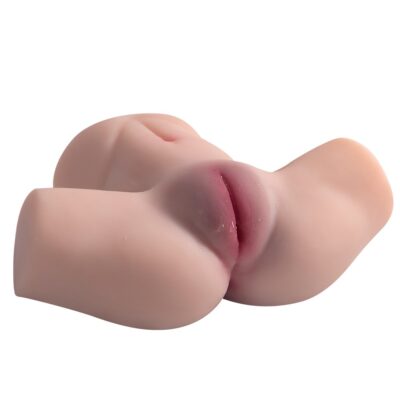
$242.33 Original price was: $242.33.$74.28Current price is: $74.28.

$665.98 Original price was: $665.98.$385.84Current price is: $385.84.

$203.14 Original price was: $203.14.$78.71Current price is: $78.71.
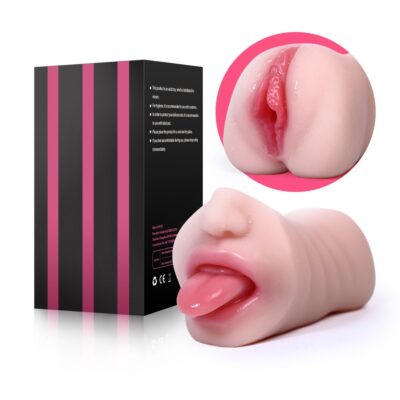
$155.30 Original price was: $155.30.$43.80Current price is: $43.80.
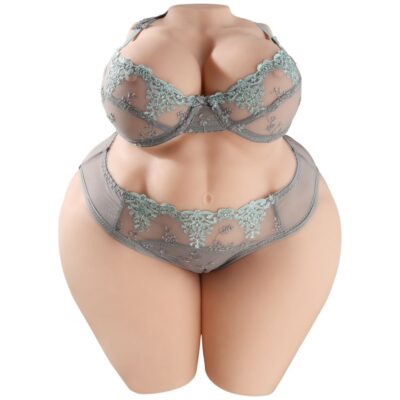
$624.00 Original price was: $624.00.$311.20Current price is: $311.20.
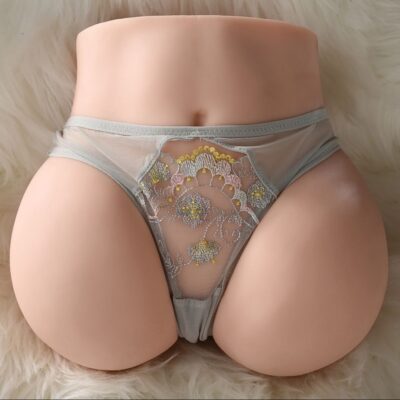
$255.28 Original price was: $255.28.$142.12Current price is: $142.12.
$592.25 Original price was: $592.25.$239.73Current price is: $239.73.

$592.25 Original price was: $592.25.$372.79Current price is: $372.79.
$603.37 Original price was: $603.37.$186.42Current price is: $186.42.

$1,088.50 Original price was: $1,088.50.$548.36Current price is: $548.36.

$478.50 Original price was: $478.50.$312.28Current price is: $312.28.

$155.30 Original price was: $155.30.$41.11Current price is: $41.11.