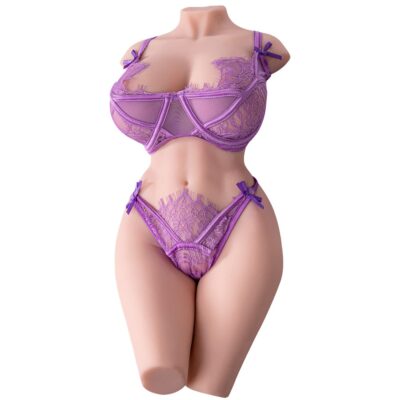
Before buying a real doll torso, verify seven details for the exact model and selected option: model identity, material, dimensions, net weight, included components, care instructions, and order terms. If the title, photographs and specification table disagree, ask the seller to resolve the discrepancy in writing before paying. A product name or photograph alone cannot establish what will arrive.
A real doll torso is a partial-body adult intimate product. The name describes a general format; it does not tell you the manufacturer, material formulation, dimensions or construction. Two listings with similar names can describe different products, while a single listing may offer several versions.
This guide focuses on checking a listing you are already considering. You will find a seven-point verification table, a worked example of conflicting specifications, a comparison worksheet and a message you can send to the seller.
Jump to: The seven checks · Conflicting details · Comparison worksheet · Seller message
A useful listing ties its claims to an identifiable model and option. Record the information below before comparing prices. Use “not confirmed” wherever a detail is missing; an empty field should not quietly become an assumption.
| Check | Record this | Clarify this mismatch |
|---|---|---|
| 1. Model identity | Model name or SKU and selected version | Photos show a different version from the selector |
| 2. Material | Named material for the body and separate components | Title says silicone; specification table says TPE |
| 3. Dimensions | Overall length, widest width and depth, with units | A circumference is presented as a width |
| 4. Net weight | Weight of the selected product itself | The only weight includes the shipping package |
| 5. Included components | Itemized contents for the selected option | A pictured accessory is not on the packing list |
| 6. Care instructions | Instructions that apply to this exact construction | A general guide conflicts with the model’s manual |
| 7. Order terms | Total payable amount, dispatch details and support process | A page-wide promise differs from the checkout terms |
Start with the product identifier. Save the page address, model name or SKU, selected options and date. If a page lets you choose a size or material, select your intended version before copying its specifications. Check whether the image, price and information table update together.
Look for consistency across the front, side and detail photographs. Different lighting can change apparent color, so a color difference alone does not prove a mismatch. A different shape, attachment or component deserves a specific question: “Does this photograph show the version selected in my order?”
When a brand name matters, ask who manufactures the selected model. Similar search terms and product names do not establish a connection between manufacturers.
Read the title, description and specification table separately. “Soft,” “realistic” and “premium” describe a seller’s positioning; they do not identify the material. Ask for the stated composition of the main body and any separate insert, coating or attachment.
If you are browsing the silicone torso category or the TPE torso category, still check the individual listing and selected option. A category label should not replace a model-specific specification.
If a seller cites a test report, ask which model or material the report covers, who issued it and what was tested. Record the scope actually described. Do not turn an unexplained badge or material name into a broader assurance about the finished product.
For a storage fit check, you need the product’s overall length, widest width and depth in its permitted storage position. A hip circumference is a measurement around the product; it cannot be substituted for the straight width of a shelf opening. Likewise, carton dimensions describe the parcel, not necessarily the item inside.
Measure the opening you must pass through as well as the space behind it. A box may fit inside a cupboard but fail to pass its doorway. Allow room for any manufacturer-recommended support or cover, and do not plan to compress a soft product to make a tight fit work.
Check units before comparing listings. One inch equals 2.54 centimeters. Keep the seller’s original measurements beside any conversion so you can trace a difference back to its source.
Net weight refers to the product itself. Gross or shipping weight can include packaging and other contents. If a listing gives only “weight,” ask which measurement it means and which selected version it covers.
Use the confirmed product weight when considering handling. Packaging weight is relevant to delivery, but it does not tell you what the unpacked product will weigh. Do not infer a particular model’s weight from a photograph or from the word “compact.”
A practical check also includes your route between storage and the place where the product will be maintained. There is no single weight limit suitable for every person or home. Record your own handling constraints before deciding whether a model fits them.
Ask for an itemized contents list. A photograph may include a display stand, cover or accessory for illustration. Treat it as included only when the selected option’s description or the seller’s written response confirms it.
For models with removable or powered components, verify the relevant part names, whether they are supplied, and whether replacements are available for that exact model. An accessory described as “universal” still needs a compatibility check.
Keep optional extras separate from the base product in your notes. Otherwise, one listing can appear cheaper simply because it excludes an item included in the other.
Request the care instructions for the chosen model, including any removable components or electrical parts. Confirm the permitted cleaning method, drying procedure and storage position. A general material guide may not account for coatings, adhesives or internal construction.
If the product page and manual disagree, ask which instruction applies. Do not resolve that conflict by combining advice from several unrelated products. You are checking whether the ownership routine is clear and practical before committing to it.
Record the selected product price, optional extras, shipping charge and any taxes or other charges disclosed for your destination. Keep an undisclosed amount marked “not confirmed” rather than treating it as zero. Compare totals in the same currency and for the same delivery destination.
Separate preparation time from transit time. Ask whether the chosen version is ready to dispatch or made to order, and whether an estimated delivery window includes preparation. The shipping and delivery information is a starting point; resolve destination-specific questions before payment.
Also ask how to report delivery damage, which evidence the seller requests and what deadlines or conditions apply. If packaging privacy matters, ask about the outer package and sender information. Save the written terms applicable to your order rather than assuming that every option follows the same process.
Pause the comparison and resolve the discrepancy for the selected model. Do not average two conflicting numbers or choose the more attractive one. A mismatch could reflect an old description, a different variant or an error; it needs clarification, not a guess about its cause.
Illustrative example only, not a Sextorsostore product: a listing title says “8 kg,” while its table says “10 kg.” Neither label explains whether packaging is included.
Ask: “For the exact option I selected, what is the net product weight, and what is the packed shipping weight?” If the seller confirms 8 kg net and 10 kg packed, record both with their labels. If both numbers are described as net, the conflict remains unresolved.
A useful response identifies the model, explains the difference and supplies a corrected specification. “The product is high quality” does not answer the question.
Use the same process for material conflicts, mismatched photos and unclear accessories: quote the two statements, identify the selected version and ask for one consistent answer. Save that response with the listing record.
Copy this worksheet into your notes. Complete one column per exact model and option. Compare confirmed details first, then list the unanswered questions. A longer list of advertised features should not hide a missing specification that matters to you.
| Field | Model A | Model B |
|---|---|---|
| URL, SKU, option and date checked | Record details | Record details |
| Material of body and separate parts | Confirmed / not confirmed | Confirmed / not confirmed |
| Overall length × width × depth | Record units | Record units |
| Net product weight | Record units | Record units |
| Included items and care instructions | Record source | Record source |
| Total and dispatch terms for your destination | Record known and unknown costs | Record known and unknown costs |
| Unresolved conflicts | List questions | List questions |
If you are comparing half-body torso models, open each product page and complete the worksheet for the option you would actually order. Keep the category page for discovery and the individual product page for verification.
Send the product link and selected option with a short, specific request. The message below can be copied and filled in:
Hello, I am considering
for delivery to [country or region]. Before I order, please confirm:
- The model identifier and whether the photos show this exact option.
- The material of the main body and any separate components.
- The overall product dimensions and net weight, separately from package measurements.
- The items included and the correct care instructions.
- The total charges you can confirm, preparation time, shipping estimate and process for reporting delivery damage.
I also noticed [quote the conflicting details]. Which information applies to this option? Please confirm it in writing. Thank you.
For a listing on this website, send your model-specific questions through Sextorsostore customer support. Keep the reply with your comparison notes and order confirmation.
No. The phrase alone does not specify silicone, TPE or the composition of separate parts. Check the individual model and selected version.
Photographs help identify the model, but perspective and cropping can make size difficult to judge. Use labeled dimensions and confirm whether they describe the product or its package.
First ask the seller to explain it. A corrected, model-specific answer can resolve an editing mistake. If a detail essential to your decision remains unclear, you do not yet have enough information to compare that listing confidently.
Keep the dated listing, selected options, seller’s clarifications, applicable terms and order confirmation. Together, these record what you understood you were ordering and make later questions easier to explain.